A conversation with Isma Reoyo
Before our final summer Wine Pairing Evening, Isma Reoyo, founder of Acirate Vinos, tells us a little more about his story, his roots and his connection to this land.
He mainly works with wines from the Sierra Suroeste de Madrid and the Sierra de Gredos, in the province of Ávila, which will be the wines we taste on 25 September.
What is your relationship with this area?
Colmenar del Arroyo is my hometown, especially on my father’s side. My grandparents were immigrants; they came from a village in Valladolid called Castronuño to make a living here, and in the end they built their life and their family here. On my mother’s side, my family is from the Pelayos de la Presa and San Martín de Valdeiglesias area.
This is where I grew up. I spent my life with my grandparents.
My parents have always worked in hospitality, and still do, so I grew up with them on weekends and many afternoons and evenings. I currently live in what used to be my grandparents’ house, and behind it there is nothing but countryside — countryside that has now been burned.
I spent the other part of my summers in Pelayos with my other grandparents, in the vegetable garden with my grandfather, in the vineyards, harvesting grapes...
These are areas that have been directly affected by the fires, so of course it hits very close to home.
I’ve managed not to cry anymore, after a long time, since all this happened. But in the end, it’s about your roots, what moves you, your home, your childhood...
My grandparents are incredibly important to me, and I think that is also why there is such a strong connection with Manolo Franco: with Manu, the team and his family.
We stand by our land and defend our little homeland, without looking down on what comes from elsewhere, but trying to give value to what is ours.
My paternal grandfather was more Castilian in that sense; work was almost the only thing that mattered. He worked as a truck driver and also had a wonderful vegetable garden. He liked drinking wine, but we didn’t have vineyards here. He didn’t own a vineyard himself and perhaps made some wine one year, but nothing significant.
My grandfather Esteban, on the other hand, from Pelayos de la Presa, was the village postman and was also known as “Esteban of the vegetable garden”. He was devoted to farming because it was his passion, alongside his job, even for many years after retiring. He did have several vineyards; the Pelayos and San Martín area is much more focused on winegrowing than ours.
He had his own winery, which we still keep, although we no longer make wine there for various reasons. But he made wine. He sold his wine. That rugged village wine that, to the person who made it, was always the best. He loved the land deeply and, as a result, agriculture and everything it gave — and continues to give.
Colmenar del arroyo después de los incendios forestales Colmenar del arroyo después de los incendios forestales Colmenar del arroyo después de los incendios forestales
How long ago did you decide to dedicate yourself to this?
Seven years with the wine distributor. I’ve been working in hospitality since I was 21, professionally, when I started studying tourism and working at the same time.
I do everything myself: I bring you the wine, I collect the payment, if I can I do the tastings, I help you...
And does that really allow you to do everything on your own?
Well, it does...
I always say I have no idea what I’m doing, I’m a terrible salesperson, but I love learning. I mean, I know some things and I learn more every day, and I love studying.
I studied to become a sommelier at the Madrid Chamber of Commerce, a very demanding course, although it is especially focused on preparing you to work in the dining room. But I come from harvesting grapes with my grandfather as a child, from making wine. I also make wine myself; some years I’ve made it and sold it.
It’s hard, you know? Complicated. But, like any self-employed entrepreneur, you’re doing something you love, and that is priceless.
What is most characteristic of the wineries in this area?
First of all, wineries tend to be quite small in size. We’re talking about very small vineyards, very old vines...
In the past, everything revolved around vineyards, and people made a living from farming, livestock and grape growing — both selling grapes as table grapes and taking them to the cooperatives that used to operate in the area.
Today, there are very few left. There is one in Cebreros, in Ávila, and another in Cadalso de los Vidrios, in Madrid. They are more or less the two cooperatives that are still operating on a significant scale.
And then, starting from these small vineyards, the cooperatives that are still operating... imagine very old vineyards belonging to people who worked the land and are still alive, people in their seventies and eighties. There is a very important winegrowing heritage there.
So, starting from that foundation, everything is generally made with respect for the land, with minimal intervention, and there are many single-vineyard wines. Even the more commercial ones, the larger producers, might make 100,000 bottles a year at most.
Most of the wineries I work with in the area are places where the winemaker, oenologist or winegrower has another job and then also has a winery. In other words, it’s their hobby, their passion, a winery where they invest the money they earn from their day job...
Even though they can still make it work, of course.
And then there are people who have dedicated themselves exclusively to their winery, people who have been running their own winery for 25 years. So there is a balance between all of these different realities.
What characterises the wines from this area?
The soil has a huge influence here: stones, rocks, granite, slate. The land is not very fertile, so the vines have to work hard to find what they need. The surrounding landscape also has a strong influence. There is a lot of scrubland, rockrose, thyme and other aromatic plants. All of that has an impact, and obviously you have to know how to work with it.
The grapes are extremely high quality, and in recent years, thanks also to the Vinos de Madrid Designation of Origin, and of course to the work of so many winegrowers and winemakers over the years, some truly excellent wines are being made.
Personally, that is what I like, and that is also why I decided to work in this area: to stand up for my land.
What was left after the fire?
The forest heritage, flora and fauna have been destroyed, and a lot of vineyards have been affected. But the vine is one of the most resilient plants in the world, because if these plants have been there for 100 years, there’s a reason. They’ve already been through everything...
The ones that have burned completely are obviously gone. There, people have to wait and, next year, prune them, cross their fingers and hope that as many as possible will sprout, then see how they evolve on their own. You can’t suddenly push them to produce again as they did before the fire.
And that’s it: you wait for the landscape to regenerate, which will take a very long time...
It’s also important to plant new vineyards so that, in a hundred years, there will be old vineyards that were planted today. But of course, you need money, and the terrain isn’t always easy to work. Mountain slopes, vineyards that can’t be reached by car... in the end, you still have to use livestock, mules or oxen.
It’s going to be complicated.
What would you like to see preserved in this Sierra twenty years from now?
Everything. Above all, the people, and of course the countryside.
The countryside is really my life, beyond work and family. It’s where I grew up and what I love. I love going out to pick wild asparagus, to look for mushrooms...
I think our children should be able to enjoy what we have enjoyed.
An evening to continue the conversation...
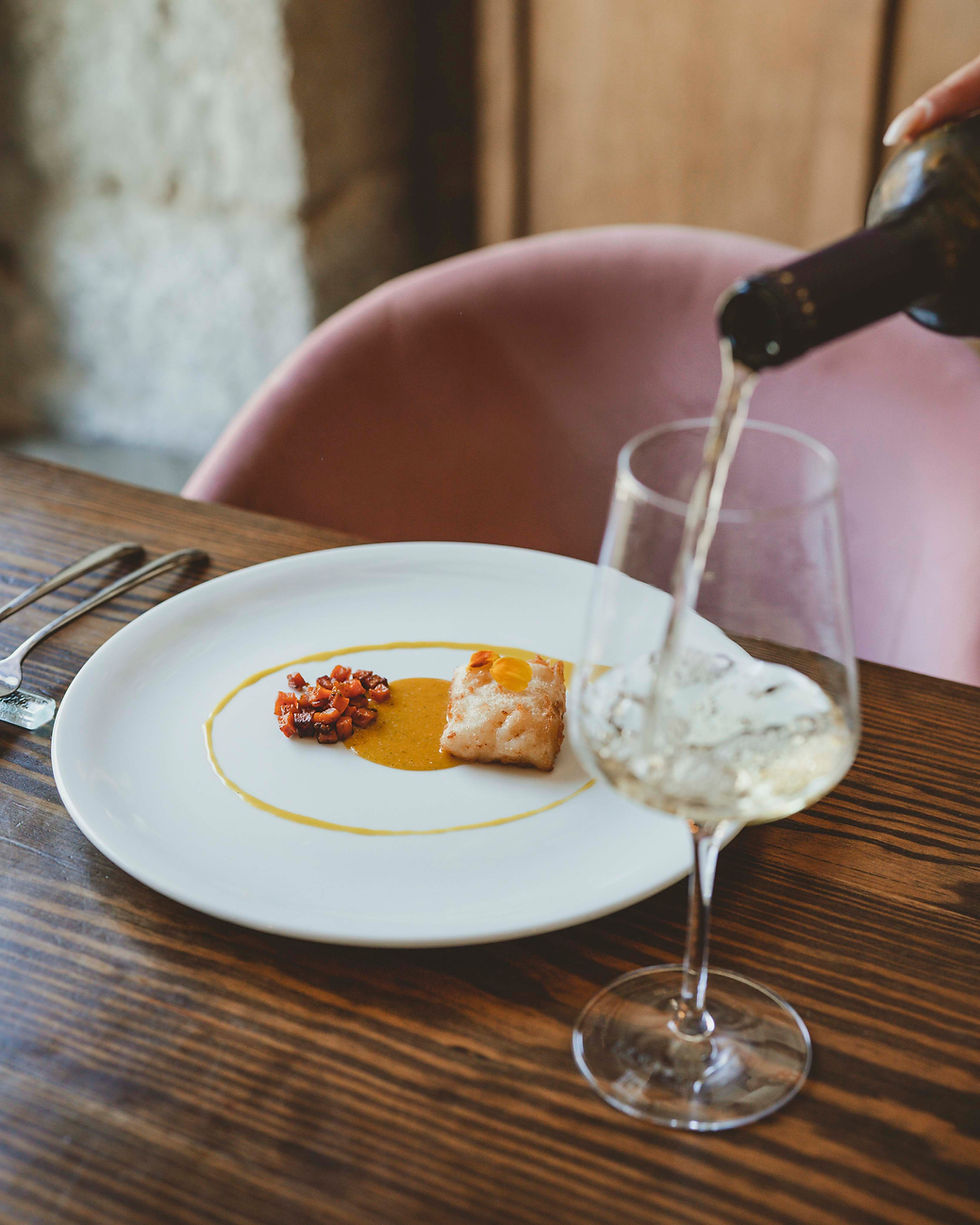
On 25 September, Isma Reoyo will be at La Casa de Manolo Franco to share his wines and continue talking about his land, his roots and everything that lies behind each bottle.
A final summer Wine Pairing Evening to get to know, taste and discover the Sierra through its wines.
Friday, 25 September · 21:00 h.
€120 per person
Last places available.


Comments